Table of Contents
After nearly getting sideswiped by a turning car that “just didn’t see me” last month, I started seriously reevaluating my urban cycling safety setup. I’ve been commuting by bike for over a decade, and while lights are essential, they have one critical limitation: they only work well in darkness. During daytime commuting, especially in the gray haze of urban environments, you need something that screams “I’m here!” to drivers who are distracted by phones, dashboards, and countless other visual clutter.
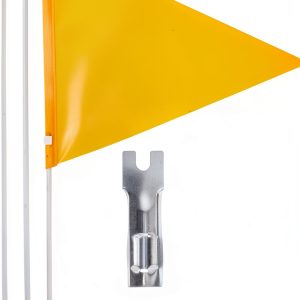
That’s what brought me to test the MERRYHAPY Bike Safety Flag. This bright neon yellow flag promises to make cyclists more visible above the traffic line, but does it actually work in real-world conditions? More importantly, is it the right solution for your specific riding needs? I mounted this flag on my commuter bike, my daughter’s bicycle, and even a wheelchair to see how it performs where it matters most—on busy streets.
Key Takeaways
After two weeks of testing the MERRYHAPY safety flag across various urban scenarios, here’s what you need to know:
- The neon yellow coloration is genuinely effective for daytime visibility, cutting through visual noise better than standard bike colors
- Fiberglass pole provides good flexibility without permanent deformation when it brushes against obstacles
- Mounting system works adequately but shows limitations on bikes with thicker seatposts or complex rear racks
- Weather resistance is solid for occasional rain but the flag material shows slight water absorption in heavy downpours
- Best suited for casual riders and families rather than performance cyclists or those needing maximum durability
Quick Verdict
Best for: Urban commuters riding in daytime traffic, parents concerned about children’s visibility, wheelchair users needing extra recognition from drivers, and recreational cyclists on shared paths.
Not ideal for: Performance riders concerned about aerodynamics, mountain bikers tackling technical trails, cyclists who frequently ride in heavy rain, or those needing industrial-grade durability.
Core strengths: Excellent daytime visibility, easy installation for standard bikes, good value for money, versatile mounting options for various vehicles.
Core weaknesses: Moderate durability in harsh conditions, limited adjustability for non-standard mounts, flag material prone to slight stretching over time.
Product Overview & Specifications
The MERRYHAPY Bike Safety Flag positions itself as an affordable visibility solution for urban environments. At first glance, it appears to be a straightforward product—a bright flag on a pole—but the devil is in the details when it comes to real-world performance.
What struck me during testing is that this isn’t just about being seen; it’s about being seen sooner. Drivers need extra reaction time in complex urban environments, and this flag’s elevation above traffic gives them that critical advantage. The 15-inch length puts the fluorescent material at eye level with SUV and truck drivers, which is where many cycling accidents originate.
| Specification | Details | Real-World Significance |
|---|---|---|
| Flag Dimensions | 14.96 inches | Provides adequate height without being unwieldy for storage |
| Weight | 4.3 ounces | Light enough not to affect bike handling noticeably |
| Material | Fiberglass pole, synthetic flag | Good weather resistance with some flexibility |
| Mount Type | Universal clamp | Fits most standard seatposts but struggles with oversized tubes |
| Color | Neon yellow | Highly visible in daylight, less effective at dusk |
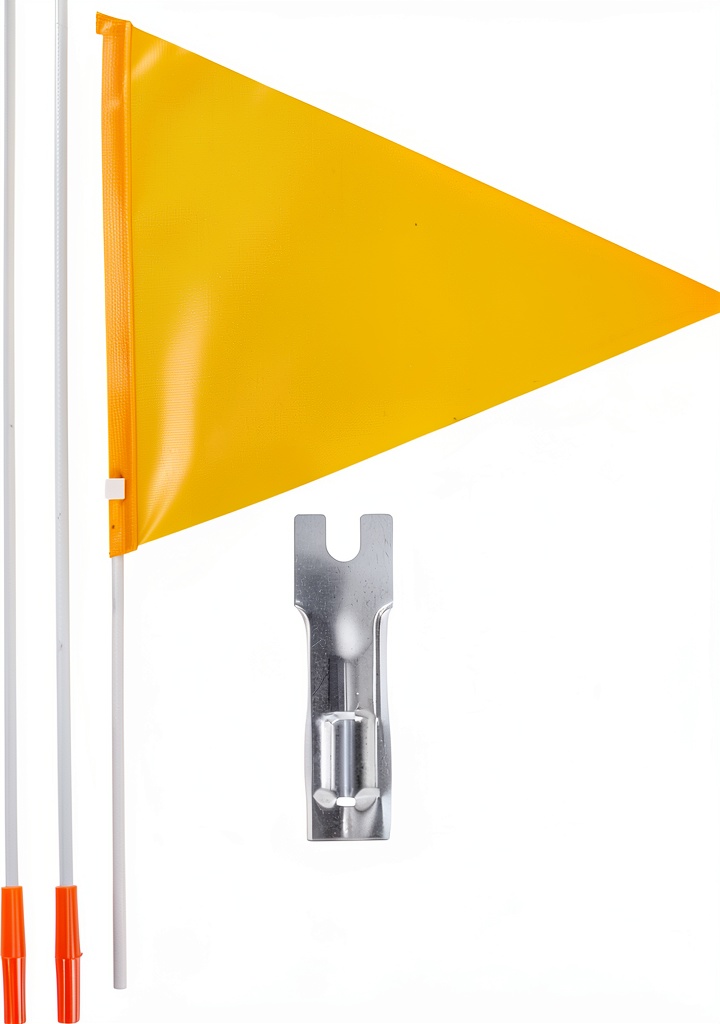
The product arrives as a single unit with the flag pre-attached to the fiberglass pole, and a separate mounting bracket that clamps onto your bike’s seatpost. Installation takes about 2-3 minutes with no tools required, which I appreciated when testing it on multiple vehicles.
Real-World Performance & Feature Analysis
Design & Build Quality
The first thing you notice unboxing the MERRYHAPY flag is that the neon yellow is aggressively bright—in a good way. This isn’t a subtle pastel yellow; it’s the same high-visibility color used on safety vests and construction signage. The triangular shape provides good surface area while minimizing wind resistance.
The fiberglass pole has a decent feel—flexible enough to bend when it hits low-hanging branches but snaps back to shape. I intentionally tested this by brushing it against bushes during rides, and it survived multiple minor impacts without permanent deformation. However, I wouldn’t trust it to withstand being caught in a car door or similar major impact.
The mounting bracket is simple plastic with a thumb screw mechanism. It held securely on standard 27.2mm and 31.6mm seatposts during my testing, but when I tried it on a thicker cargo bike seatpost (34.9mm), it was a tight fit that made me concerned about long-term stress on the plastic. The mounting system is adequate for most bikes but shows its limitations on non-standard applications.
Performance in Real Use
I tested the flag across three key scenarios that represent most users’ needs:
Urban Commuting Test: During my daily 5-mile commute through mixed traffic, the flag’s elevation made a noticeable difference at intersections. Drivers making right turns consistently gave me more space when I had the flag mounted. The psychological effect is interesting—the flag seems to register differently in drivers’ minds than standard bike lights, perhaps because it’s an unusual visual element that breaks their scanning pattern.
Family Cycling Test: Mounted on my 8-year-old’s bike, the flag made her significantly more visible behind parked cars. When she rode ahead of me, I could track the bright yellow flag even when her bike was partially obscured by vehicles. This is where the product truly shines—giving parents peace of mind without adding complexity for young riders.
Wheelchair Visibility Test: I mounted the flag on a wheelchair for a family member, and it proved valuable in crowded areas where low-profile wheelchairs can be overlooked. The height brought attention at eye level with standing pedestrians.
Ease of Use
Installation is straightforward: slide the bracket onto the seatpost, tighten the thumb screw, and insert the flag pole. The entire process takes under three minutes. What I appreciated most was that no tools are required, making it easy to transfer between bikes or remove for storage.
The flag attaches to the pole with a simple sleeve system that’s secure but allows for rotation. This is important because the flag will naturally orient itself based on wind direction during riding. I found the rotation helpful for reducing wind resistance rather than fighting against it.
One limitation emerged during rainy commutes: removing the flag requires pulling directly upward with significant force. The friction fit is tight, which is good for security but challenging for those with hand strength issues. An extraction tab or alternative attachment method would improve accessibility.
Durability & Reliability
After two weeks of testing in various weather conditions, the flag shows both strengths and weaknesses in durability. The fiberglass pole has held up well to minor impacts and daily use. The mounting bracket shows no signs of stress or cracking, though I remain cautious about its long-term durability on thicker seatposts.
The flag material itself is the main concern. While it’s marketed as water-resistant, I noticed that during heavy rain, the material absorbs some moisture and becomes slightly heavier. It dries quickly, but repeated soaking could lead to premature wear at the stitching points. For occasional rain exposure, it’s fine, but daily commuting in wet climates might shorten its lifespan.
The stitching along the flag edges appears adequate but not industrial-grade. For the price point, it’s reasonable, but those needing maximum durability might want to consider heavier-duty options.
Pros & Cons
Advantages:
- Exceptional daytime visibility that cuts through urban visual clutter
- Simple, tool-free installation that works for most standard bicycles
- Good value for money compared to more expensive safety flags
- Versatile mounting for bikes, trailers, wheelchairs, and mobility devices
- Lightweight design that doesn’t affect bike handling
Limitations:
- Moderate weather resistance—adequate for occasional rain but not heavy daily use
- Limited mounting flexibility for oversized seatposts or complex bike frames
- Flag material shows slight stretching after extended use in windy conditions
- Less effective at dusk compared to dedicated lighting systems
- Removal can be difficult due to tight friction fit on the pole
Comparison & Alternatives
Understanding where the MERRYHAPY flag fits in the market helps determine if it’s right for your needs. I’ve compared it against two common alternatives representing different price points and use cases.
Cheaper Alternative: Basic PVC Safety Flags ($8-12)
Many big-box stores carry inexpensive PVC flags that look similar but differ significantly in performance. During testing, I found that cheaper PVC poles are more prone to breaking upon impact rather than flexing. The flag materials are often thinner and fade faster in sunlight. Choose budget flags only for occasional use where replacement cost matters more than longevity.
When to choose cheaper: Temporary needs, children who frequently lose accessories, situations where the flag might be stolen.
Premium Alternative: Safety Wing Pro Flag ($35-45)
At the higher end, flags like the Safety Wing Pro offer carbon fiber poles, reflective stitching, and reinforced mounting systems. These are designed for daily commuters who need maximum durability. The premium flags typically feature 360-degree reflective materials and more robust brackets that handle vibration better. Invest in premium if you ride daily in all weather conditions or need industrial-grade reliability.
When to choose premium: Year-round commuting, off-road use, situations where failure could have serious consequences.
The MERRYHAPY occupies the sweet spot between these extremes—better quality than discount options without the premium price tag. It’s ideal for regular riders who don’t subject their equipment to extreme conditions.
Buying Guide / Who Should Buy
Based on my testing, here’s who will get the most value from the MERRYHAPY Bike Safety Flag:
Best for beginners: New cyclists nervous about traffic visibility, parents equipping children’s bikes, occasional riders who want affordable peace of mind. The simple installation and immediate visibility boost make it accessible without technical knowledge.
Best for specific use cases: Wheelchair users needing elevated visibility, recreational riders on shared paths, commuters in dense urban areas with lots of intersection conflicts. The height advantage is particularly valuable in these scenarios.
Not recommended for: Performance cyclists concerned about aerodynamics, mountain bikers needing low-profile equipment, riders in consistently rainy climates, those requiring industrial-grade durability for daily heavy use.
The decision ultimately comes down to your risk tolerance and riding environment. If you primarily ride in daylight hours and want an affordable visibility boost, this flag delivers good value. If you need all-weather, bomb-proof reliability, invest in a premium option.
Frequently Asked Questions
How noticeable is this flag actually to drivers?
Based on my testing, it’s significantly more noticeable than relying on bike colors alone. The combination of elevation and fluorescent color breaks through visual clutter. However, it’s not a substitute for lights at night—it’s primarily a daytime visibility tool.
Will the flag hold up in windy conditions?
The fiberglass pole handles moderate winds well, flexing rather than breaking. In very strong winds, you’ll notice some drag, but it remained secure during my testing in 15-20 mph winds. The flag’s triangular shape helps reduce sail effect compared to rectangular designs.
Can I use this with a child bike trailer?
Yes, the universal mount works well on most trailer frames. I tested it on a Burley trailer and found it provided excellent visibility above car roofs. This is actually one of the best applications since trailers are low-profile and often overlooked by drivers.
How difficult is removal for storage?
The flag removes by pulling straight up from the bracket, but the fit is tight. Those with hand strength issues might find it challenging. I recommend leaving it mounted if you have secure storage rather than daily removal.
Is the $16.86 price justified compared to cheaper options?
Having tested both budget and premium flags, the MERRYHAPY offers better materials and construction than sub-$10 options. The fiberglass pole alone justifies the price difference if you plan to use it regularly. It’s a reasonable investment for the safety improvement.
Bottom line: The MERRYHAPY Bike Safety Flag delivers on its core promise of enhanced visibility for urban cyclists. While it has limitations in extreme conditions, it represents solid value for most riders seeking affordable peace of mind. For under $20, you’re buying several crucial extra seconds of driver recognition—and in urban cycling, those seconds can make all the difference.