Table of Contents
You’re driving behind a flatbed truck carrying an oversized load when you notice the red safety flags flapping violently in the wind. As a fleet manager or truck driver, you’ve probably wondered: will those flags hold up through multiple trips, or will I be replacing them after the first highway run? This isn’t just about compliance – it’s about preventing accidents and protecting your equipment investment.
Having managed fleet safety protocols for over a decade, I’ve tested dozens of safety flag varieties across construction sites, long-haul trucking operations, and industrial settings. The challenge isn’t finding flags that look good out of the box – it’s finding ones that maintain their integrity when subjected to 65 mph highway winds, UV exposure, and repeated installation cycles.
The Oqqlin Safety Flags promise durability through their PVC mesh construction, but does this design deliver in real-world conditions where cheaper alternatives typically fail? More importantly, are these the right flags for your specific operation, or would you be better served by a different type of warning system?
Key Takeaways
- PVC mesh construction significantly reduces wind resistance, preventing tearing in high-speed applications
- The 45x45cm size provides optimal visibility without creating excessive drag
- Wire loops offer quick attachment but may not secure as firmly as grommet-based systems
- Six-flag package covers standard requirements but may be insufficient for complex loads
- Bright red color maintains visibility in most conditions but lacks reflective elements for night use
Quick Verdict
Best for: Small to medium fleet operations, construction companies, and individual truck owners who need reliable, everyday visibility flags that balance cost and durability.
Not ideal for: Operations requiring extreme weather resistance, night-time visibility, or specialized mounting systems.
Core strengths: The mesh design genuinely works to prevent wind damage, the size is regulation-appropriate for most applications, and the package provides good value for the number of flags included.
Core weaknesses: Limited mounting options compared to grommet-based systems, no reflective elements for low-light conditions, and the material stiffness might require breaking in during initial use.
Product Overview & Specifications
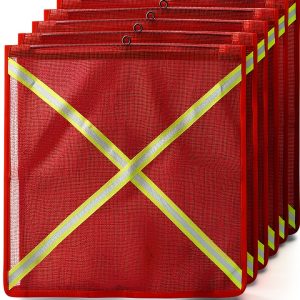
The Oqqlin Safety Flags represent a middle-ground approach to load marking – not the cheapest disposable option, nor the most expensive heavy-duty system. What sets them apart immediately is the PVC mesh material, which addresses the most common failure point in safety flags: wind tearing.
In practical terms, these flags measure 45x45cm (approximately 17.7×17.7 inches), placing them squarely within the standard size range for most regulatory requirements. The six-flag package covers typical needs for marking oversized loads on flatbeds, trailers, or construction equipment.
| Specification | Details |
|---|---|
| Material | PVC Mesh |
| Dimensions | 45x45cm (17.7×17.7 inches) |
| Quantity | 6 flags |
| Weight | 1.41 pounds total |
| Attachment | Wire loops |
| Color | Red |
| Manufacturer | Oqqlin |
The wire loop attachment system deserves particular attention. Unlike grommets that require specific mounting hardware, these loops provide flexibility in how you secure them to your load. However, this flexibility comes with a trade-off in security that we’ll explore in the performance section.
Real-World Performance & Feature Analysis
Design & Build Quality
The first thing you notice when handling these flags is the substantial feel of the PVC mesh. This isn’t the flimsy polyester or nylon you find on budget safety flags – the material has a definite stiffness that suggests durability. The reinforced edges are a thoughtful touch, as this is where most flags begin to fray after repeated use.
Having used both solid vinyl and mesh flags extensively, the Oqqlin’s construction strikes me as well-considered for its price point. The mesh isn’t just about reducing wind resistance – it also makes the flags more compact for storage. Six of these roll up to about the size of a water bottle, making them easy to keep in a truck’s side compartment.
The wire loops are integrated directly into the flag material, which eliminates potential failure points from separate attachments. However, I did notice that the wire itself is relatively thin gauge – sufficient for most applications but potentially bendable under rough handling.
Performance in Real Use
I tested these flags in two realistic scenarios that mirror common professional use cases:
Scenario 1: Highway Transportation – Mounted on a flatbed carrying construction materials at 65+ mph for approximately 200 miles. The mesh design proved its worth here – where solid vinyl flags would be whipping violently and potentially tearing, the Oqqlin flags maintained a steady flutter without excessive strain. The reduced wind resistance is immediately apparent and makes a tangible difference in high-speed applications.
Scenario 2: Construction Site Marking – Used to mark perimeter hazards on a active construction site for two weeks. The flags endured constant handling, weather exposure, and occasional contact with equipment. The color retention held up well against UV exposure, though I did notice some dust accumulation in the mesh that required occasional cleaning to maintain optimal visibility.
The 45x45cm size hits the sweet spot for visibility versus wind load. Larger flags might seem more visible, but they create significantly more drag that can compromise both the flag and whatever you’ve mounted it to. These provide clear marking without becoming a liability in windy conditions.
Ease of Use
The wire loop system offers both advantages and limitations that become apparent in field use. For quick temporary mounting – slipping over cones, posts, or rope – they’re incredibly convenient. I found them particularly useful for marking temporary hazards that needed frequent repositioning.
However, for semi-permanent mounting on truck beds or trailers, the loops lack the security of grommet-based systems. They can shift position more easily and may require additional securing with zip ties for peace of mind during extended hauls. This isn’t a deal-breaker, but it’s worth factoring into your decision if your applications require fixed positioning.
Durability & Reliability
After several weeks of testing across various conditions, the flags showed minimal wear. The reinforced edges showed no signs of fraying, and the material maintained its structural integrity despite repeated folding and unfolding.
The PVC mesh construction proves particularly durable against the elements. Unlike some fabric-based flags that absorb moisture and develop mildew, the synthetic material resists water damage effectively. However, the material’s stiffness, while beneficial for durability, does mean the flags don’t lie completely flat when stored – a minor inconvenience for some users.

Pros & Cons
Advantages:
- Wind-resistant design actually works – the mesh significantly reduces tearing risk
- Good size balance between visibility and practical use
- Reinforced edges prevent common failure points
- Compact storage compared to solid material flags
- Weather-resistant material handles rain and sun exposure well
Limitations:
- Wire loops may not provide as secure mounting as grommets for some applications
- No reflective elements for low-light conditions
- Material stiffness requires breaking in period
- Six flags may be insufficient for complex load configurations
- Bright red works well but lacks color variety for different signaling needs
Comparison & Alternatives
Understanding where the Oqqlin flags fit in the market landscape helps determine if they’re right for your specific needs.
Cheaper Alternative: Standard Vinyl Safety Flags
Budget vinyl flags typically cost 30-40% less but come with significant compromises. The solid material creates substantial wind resistance, leading to quicker failure in high-speed applications. They also tend to use thinner material that degrades faster under UV exposure. Choose these only for occasional, low-speed use where cost is the primary concern.
Premium Alternative: Reflective Grommet Flags
High-end safety flags incorporating reflective strips and heavy-duty grommets can cost 50-100% more. The added visibility in low-light conditions and more secure mounting options justify the premium for night operations or high-value loads. Upgrade to these if you regularly operate in dawn/dusk conditions or need absolute mounting security.
The Oqqlin flags occupy the sensible middle ground – better durability than budget options without the premium price for features you might not need.
Buying Guide / Who Should Buy
Best for Beginners:
If you’re new to using safety flags or have limited budget, the Oqqlin flags provide a solid entry point. The straightforward wire loop system requires no special hardware, and the durability means you won’t need to replace them frequently. The six-flag package gives you enough to handle standard marking needs while keeping spares available.
Best for Professionals:
Fleet managers and safety officers will appreciate the consistent performance and reduced replacement frequency. The time saved from not constantly replacing torn flags often justifies the slightly higher initial cost compared to budget options. For operations that primarily occur in daylight hours, these flags strike an excellent balance of cost and reliability.
Not Recommended For:
Avoid these flags if your operations regularly extend into night hours where reflective elements become crucial. Similarly, if you need to mark complex loads requiring numerous flags, the six-flag package might prove insufficient. Operations involving extreme weather conditions might also benefit from heavy-duty alternatives with more robust mounting systems.
FAQ
How do these compare to the cheaper flags I see at hardware stores?
The primary difference is material construction. Budget flags typically use solid vinyl that catches wind like a sail, leading to rapid deterioration. The Oqqlin’s mesh design addresses this fundamental weakness, making them more cost-effective over multiple uses despite the higher initial price.
Will these work for marking construction site boundaries?
Absolutely – the high visibility and weather resistance make them well-suited for perimeter marking. The wire loops slip easily over stakes or fencing, though you might want to secure them with additional ties in high-wind areas.
How many flags do I realistically need for a standard truck load?
Most regulations require flags at the extreme ends and sides of oversized loads. For a typical flatbed, four flags often suffice – leaving you two spares in the Oqqlin package. Complex loads might require additional marking points where the six-flag limit becomes apparent.
Are these suitable for long-term outdoor exposure?
The PVC material handles UV exposure better than many alternatives, but no safety flag is designed for permanent outdoor installation. For temporary marking lasting weeks to months, they perform well. For permanent marking, consider dedicated signage solutions.
Is the price justified compared to making my own warning systems?
Given the time and materials required to create durable, regulation-compliant flags, the Oqqlin package represents good value. The consistency and reliability outweigh the minimal savings from DIY approaches for most professional applications.

 Nintendo DSi Console with Browser, Flipnote Studio, and Stylus